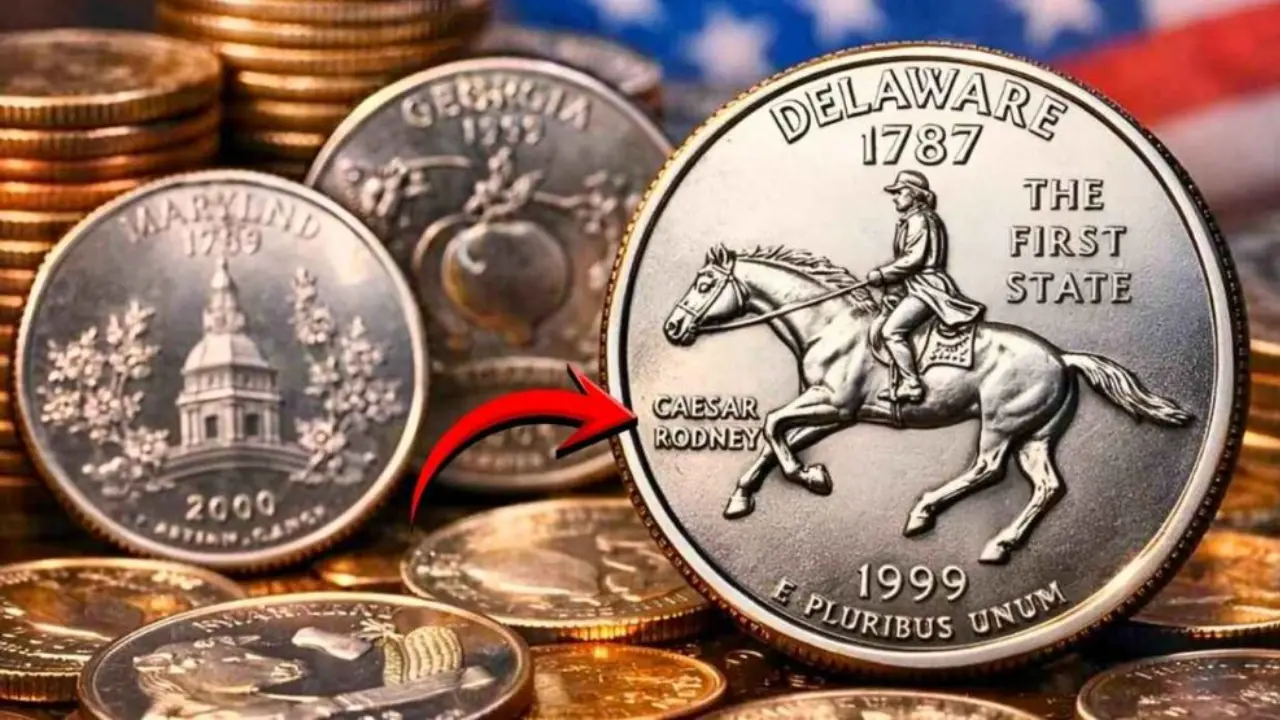
The State Quarters Value 2026 reflects the ongoing interest in the 50 State Quarters Program, which has transformed U.S. coin collecting. These quarters represent each U.S. state, with distinctive designs on the reverse that appeal to both casual collectors and serious numismatists. This series remains a constant in the market for modern commemorative coins, with some coins commanding premiums depending on condition, mint marks, and production errors.
Coin Features
State quarters measure 24.26 millimeters in diameter and 1.75 millimeters in thickness. Each coin weighs 5.67 grams and features a reeded edge design. The obverse features a modified Washington portrait, while the reverse design displays individual state marks. Standard circulation strikes bear either Philadelphia (P) or Denver (D) mint marks, and San Francisco (S) proof versions are also available for collectors.

Metal Composition
These quarters feature a copper-nickel clad composition with a pure copper core. The outer layer is 75% copper and 25% nickel, creating the coin’s distinctive silvery appearance. This composition totals 8.33% nickel and 91.67% copper by weight. The cupro-nickel clad design ensures durability for circulation while maintaining collectible appeal for numismatic purposes.
Rarity and Demand
Most state quarters are common in circulation, with millions produced each year. Collector demand is primarily focused on uncirculated specimens, proof versions, and error coins. Low-mintage issues of certain years attract premium interest among completionists. The 1999 Delaware quarter began the series, while Hawaii ended regular production in 2008, and the territories followed suit by 2009.

Minting Details
Production took place between 1999 and 2009 at the Philadelphia, Denver, and San Francisco facilities. Annual mintage figures varied significantly by state and mint location. Philadelphia and Denver produced billions for circulation, while San Francisco produced proof versions specifically for collectors. Five different state designs are issued each year, making a total of 56 designs for the territories and the District of Columbia combined.
Condition and Grading
Circulation-strike state quarters are graded from Good to Mint State condition using the Sheldon scale. Most circulated examples show wear on Washington’s high points and state design details. Uncirculated specimens graded MS-65 or higher command higher premiums. Proof versions receive different grading standards, with PR-69 and PR-70 exhibiting flawless strikes with mirror-like surfaces and sharp design elements.

Market Value
Circulated State Quarters typically trade at a minimum premium of face value or 25 cents. Uncirculated rolls fetch $15 to $40, depending on state and condition. High-grade examples certified MS-67 or better sell for between $25 and $200. Proof versions average $5 to $15 individually, while complete Proof sets cost $150 to $300. Error varieties command significantly higher prices.
Investment Potential
State quarters offer an affordable entry point for beginning collectors hoping for a small upside. Complete sets in non-circulation condition offer better long-term value than individual coins. Error coins, including off-center strikes and doubled dies, offer the strongest investment opportunities. Silver proof versions, made with 90% silver content, offer both genuine precious metal value and numismatic premiums.

Verdict: State Quarters Value 2026
State Quarters Value 2026 demonstrates continued collector interest in modern American commemorative coins. With unique specifications, varying mintages, and condition-sensitive pricing, these quarters appeal to a variety of collecting strategies. Market value remains available for most issues, although high-grade and error specimens command significant premiums. This series represents an interesting, affordable numismatic find for collectors and investors.